
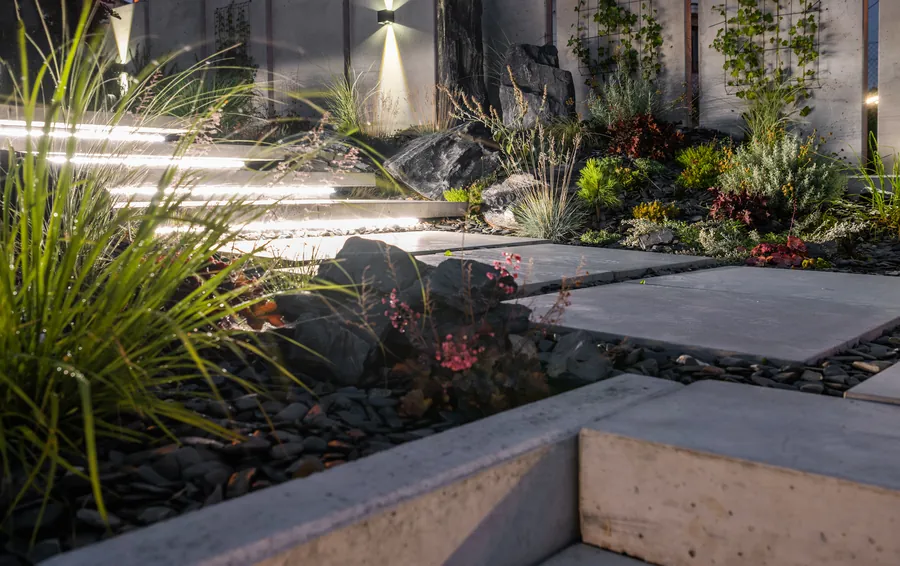
If you want a Tucson AZ landscape that feels intentional, performs well in desert conditions, and still looks cohesive years from now, start with a whole-site master plan, not piecemeal upgrades. A master plan aligns grading, drainage, circulation, outdoor rooms, planting, irrigation, and lighting into one concept, so each investment supports the next. For luxury homes and high-visibility commercial properties, this design-first approach protects design intent, reduces costly rework, and makes phasing straightforward.
The real cost of “piece by piece”
Many owners begin with a patio refresh, then add a grill island later, then replace planting, then update lighting, then tweak irrigation. The issue is not the ambition, it’s the lack of a unifying framework. Without a whole-site concept, you often end up paying twice for demolition, patching, and “make it work” fixes that could have been avoided with a single coordinated plan.
Common symptoms of piecemeal landscaping design:
- Disconnected outdoor spaces that do not relate to the architecture or to each other
- Mismatched materials and elevations that create awkward transitions
- Irrigation and drainage conflicts (zones that do not match plant needs, runoff where you do not want it)
- Lighting added as an afterthought can limit placement and create glare instead of ambiance.
- Planting that struggles because microclimates and soils were not planned from the start
If you have ever searched “landscaping designers near me” or “garden designer near me” after a few rounds of upgrades, it is usually because the property never got a single, integrated direction.
Key terms, defined (without the fluff)
Master plan (whole-site concept): A comprehensive design framework for the entire property, showing how outdoor rooms, circulation, hardscape, planting, water management, and lighting work together now and in future phases.
Design intent: The “why” behind the plan, the spatial relationships, views, material hierarchy, and experience the design is meant to create. Preserving this intent is what keeps a high-end landscape from slowly turning into a patchwork.
Program: How you want to use the site, for example dining, quiet shade, entertaining, arrival experience, pool days, pet zones, privacy, or a commercial entry sequence.
Phasing: A step-by-step build plan tied to budget and timing, designed so early phases do not block or complicate later improvements.
Microclimates: Distinct conditions across the site (sun, shade, reflected heat, wind exposure, drainage patterns) that determine what will thrive and where.
Why Tucson luxury landscapes need a master plan first
The Sonoran Desert is beautiful, but it is not forgiving when the basics are off. Heat, sun angles, monsoon rain, and challenging soils amplify small planning mistakes. A master plan helps you make fewer, better decisions early, including:
1) Circulation and arrival, the “architecture” of the outdoors
Luxury landscapes feel calm and effortless because movement is planned. A whole-site concept answers:
- Where do guests arrive and where should their eyes go?
- How do you move from indoors to outdoors at peak heat and after dark?
- Where do service routes belong so they stay discreet?
When circulation is solved early, southwest landscapes read as intentional rather than “added on.”
2) Grading, drainage, and water harvesting before finishes
In Tucson, water is either scarce or suddenly abundant during storms. Planning grades and drainage first protects investments like stone, concrete, and landscape lighting. Tucson Water also emphasizes efficient landscape watering practices and resources for desert landscapes.
A master plan typically maps:
- How water moves across the property during monsoon events
- Where infiltration or water harvesting makes sense
- How to protect foundations, patios, and hardscape edges from erosion and runoff
3) Planting designed as a palette, not a shopping list
High-end landscape design Tucson clients expect is not about “more plants.” It is about composition, seasonal interest, and plants placed where they actually want to live. University of Arizona Extension materials also emphasize starting with a base map and designing with site conditions, then aligning plants and irrigation to those realities.
A master plan organizes planting by:
- Microclimates (shade, reflected heat, wind pockets)
- Soil realities and amendments
- Water needs and irrigation zoning
- Color, texture, and structure across seasons
4) Irrigation and lighting planned together (so neither is compromised)
If you install irrigation first without a holistic plan, you may later discover your future lighting needs conduit runs, sleeve locations, or planting bed changes. If lighting comes last, you may be limited to “where power happens to be,” instead of where light should be. A master plan coordinates both early so southwest landscaping designs feel polished day and night.
5) Budget protection through intelligent phasing
A master plan is not automatically “do everything at once.” It’s the opposite: it lets you phase with confidence. With a whole-site plan, phase one is not random, it is foundational. You invest first in elements that set alignment and infrastructure, then layer in finishes and details.
What an architect-led master plan process looks like
A strong master plan is process-driven. Landscape Design West describes a design process that begins with a discovery-driven consultation, followed by site analysis and custom CAD concepts, then preliminary and final presentations, with installation consultation recommended to protect the integrity of the design intent. Landscape Design West Website c…
Here is how that typically translates into practical stages:
Step 1: Discovery and priorities
This is where the project stops being “ideas” and becomes a clear direction. You define:
- How you live outdoors (and when, especially evenings in the warm seasons)
- What you want the property to feel like, modern desert, rLandscape Design West Website c…t calm
- Maintenance expectations and performance goals
Step 2: Site analysis and concept development
A whole-site concept is built from what the site is actually doing: grades, views, sun, wind, existing vegetation, drainage, and architecture. You then explore one or more concept layouts that organize outdoor rooms, circulation, and focal points.
Step 3: Preliminary design and budget alignment
Luxury outcomes require realism. At this stage, the design is coordinated enough for a contractor to estimate, so you can adjust scope or materials without breaking the concept.
Step 4: Final plan and phasing roadmap
Final deliverables clarify materials, key details, planting intent, and the logic behind the plan. This is also where phasing is locked in so implementation stays cohesive.
Step 5: Installation support to preserve design intent
This is the difference between “a plan on paper” and a finished landscape that matches the vision. Installation consultation helps confirm layout in the field, review hardscape alignment, and fine-tune plant placement so the built result stays true to the design intent.
Decision criteria that matter in the Sonoran Desert
When you evaluate options, here are criteria that separate long-term performance from short-term looks:
Shade strategy: Where will shade be created (trees, structures, walls, canopies) and how will it change over time?
Material heat behavior: Some finishes store and radiate heat. A master plan considers comfort, reflectivity, and glare, especially around seating and entries.
Water-wise structure: Group plants by water need, align drip zones, and plan irrigation access. Arizona water guidance also emphasizes drip irrigation design considerations and efficient watering approaches.
Seasonal experience: A landscape should have year-round interest, not just one peak season.
Night use and lighting hierarchy: Plan lighting in layers (paths, architectural accents, focal highlights, gathering areas) for safety and atmosphere, not brightness.
Maintenance reality: Luxury does not mean high maintenance. It means details that age well.
Quick checklist: what to consider before you upgrade anything
Use this short checklist before you invest in a new patio, planting refresh, or lighting overhaul:
- Define the program: What are the top 3 outdoor uses you want to support?
- Map your microclimates: Where is reflected heat strongest, where is shade reliable, where does water collect?
- Confirm circulation: How do people move from car to entry, and from indoors to outdoor rooms?
- Set a material direction: Choose a palette that matches the architecture and feels consistent across the site.
- Plan water and power early: Irrigation zones, sleeve locations, transformer placement, and future conduit paths.
- Decide on phasing: What must happen first so later phases do not require demolition?
- Protect design intent: Who will verify layout and planting placement during installation?
The master plan advantage in one sentence
A whole-site concept ensures every element, hardscape, planting, irrigation, and lighting, is designed to connect, so your landscape feels like one composed environment instead of a collection of upgrades.
