
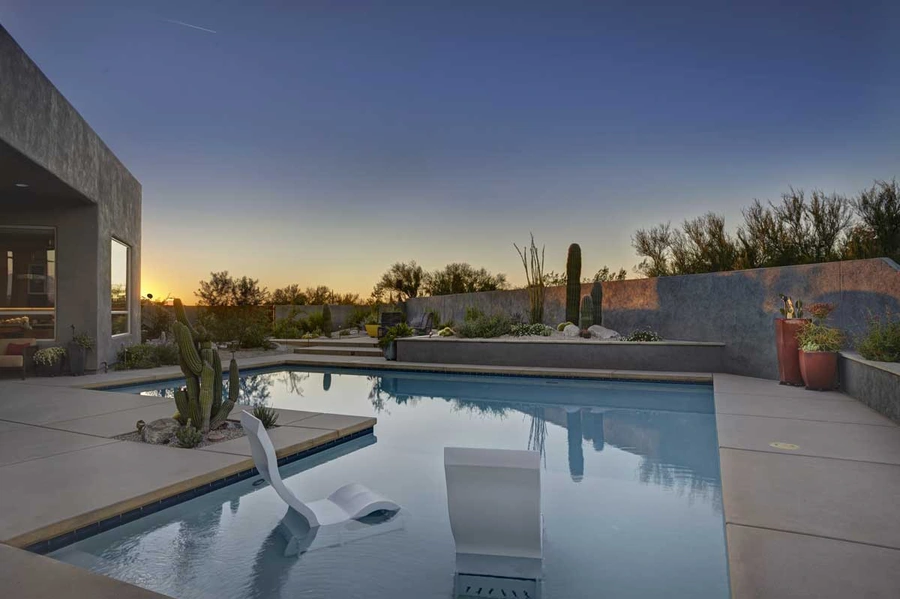
If you’re planning a high-end landscaping design for a Tucson property, these three terms can sound interchangeable, but they lead to very different outcomes.
In short, permaculture is a whole-system strategy that designs your landscape to function like an ecosystem. Xeriscape is a water-smart approach that prioritizes low-water planning and efficient irrigation. Drought-tolerant landscape design focuses on plant and material choices that stay beautiful with less water while still supporting a refined, resort-level look for a Tucson AZ landscape.
In our opinion, as a Landscape Architect, the best choice often depends on how you want the space to live: Do you want an edible, regenerative landscape with layered functions, a clean low-water Southwest landscape with disciplined plant groupings, or a drought-tolerant outdoor living setting that feels luxurious and curated?
Let's define each concept in more detail.
Permaculture
Permaculture is a design framework. It is less about a specific “look” and more about creating a landscape that produces multiple benefits at once, such as shade, habitat, food, soil improvement, water infiltration, privacy, and beauty. In a luxury setting, permaculture can still look polished, but it requires intentional planning and a client who values function as much as appearance.
Xeriscape
Xeriscape is a water-conserving landscaping approach that emphasizes smart planning, soil improvement, appropriate plant selection, efficient irrigation, mulching, and practical maintenance. Xeriscape can be minimal and modern, lush and layered, or distinctly regional. It is about reducing waste while keeping the design cohesive.
Drought-tolerant landscape design
Drought-tolerant landscape design is primarily about resilience and aesthetics in arid conditions. It focuses on plants and materials that perform with reduced irrigation, plus layout choices that protect plants from heat stress and simplify long-term care. Many elevated southwest landscaping designs fall into this category because it supports a high-end look without relying on constant water input.
What makes them different in real projects
The biggest difference is the goal of the system.
- Permaculture asks: “How can the landscape function as a living system that supports itself over time?”
- Xeriscape asks: “How can we design a beautiful landscape that uses water efficiently and responsibly?”
- Drought-tolerant design asks: “Which plants, materials, and microclimate strategies will stay attractive with less water and less risk?”
A helpful way to think about it for landscape design Tucson properties is this:
- Permaculture is a philosophy and planning model.
- Xeriscape is a resource strategy with clear water-smart principles.
- Drought-tolerant design is a plant-and-performance strategy that can be applied within many design styles.
Quick comparison for luxury properties in Tucson
Permaculture
Best for: Owners who want sustainability, habitat support, and layered function, potentially including edible elements
Water approach: Captures, slows, spreads, and sinks water where possible, then uses efficient irrigation as needed
Visual style: Can be naturalistic or highly refined, depending on design intent and maintenance commitment
Maintenance: Can be higher at first because systems mature over time and require learning and seasonal attention
Strength: Long-term resilience and multi-use landscape performance
Xeriscape
Best for: Owners who want disciplined water efficiency without sacrificing design quality
Water approach: Efficient irrigation, hydrozoning, smart plant placement, improved soil, and mulching
Visual style: Flexible, from minimal contemporary to classic Tucson AZ landscape plant palettes
Maintenance: Predictable and manageable with correct plant choices and irrigation tuning
Strength: Strong balance of beauty, water responsibility, and practical long-term care
Drought-tolerant design
Best for: Owners who want a refined outdoor living environment that thrives in heat with lower water demand
Water approach: Reduced supplemental irrigation with strategic establishment periods and microclimate planning
Visual style: Often the most “curated” and architectural, ideal for luxury homes and clean lines
Maintenance: Typically the easiest to keep looking pristine when plant palette and spacing are designed correctly
Strength: High visual impact with lower risk in harsh summer conditions
How a landscape architect evaluates your site before choosing an approach
When homeowners search for a Landscape Architect for their properties, the real value is not just plant knowledge. It is the ability to translate your goals and your site conditions into a cohesive plan that will hold up over time.
For Tucson landscape architects, the decision usually starts with a structured site analysis and lifestyle planning:
- Sun and heat exposure: Morning vs afternoon sun zones, reflected heat from walls and paving, wind corridors
- Microclimates: Protected courtyards, shaded patios, heat pockets near hardscape, and cooler north exposures
- Soil and drainage: Compaction, caliche presence, infiltration potential, and grading opportunities
- Water strategy: Existing irrigation, water pressure realities, and where efficiency upgrades matter most
- Architecture and aesthetics: How the landscape supports the home’s style, scale, and arrival sequence
- Outdoor living priorities: Pool setting, entertaining areas, fire features, privacy, views, and circulation
- Maintenance standards: How “perfect” you want the landscape to look, and how much seasonal attention you want to give it
This is where the terms become practical. The same property can support a drought-tolerant design with a strong architectural plant palette, a xeriscape plan with hydrozones and highly efficient irrigation, or a permaculture-inspired system that builds soil and habitat and includes productive planting zones. The right answer depends on your goals and the level of interaction you want with the landscape.
Choosing the right approach for a luxury Tucson AZ landscape
Choose permaculture if you want a landscape that does more than look good. Permaculture is ideal if you want your landscape to actively support:
- Pollinators and wildlife habitat in intentional ways
- Edible or medicinal plant zones integrated into an elegant plan
- Soil improvement over time, not just immediate installation results
- Water harvesting concepts that reduce runoff and build resilience
- A landscape that evolves and matures like a living system
Where permaculture can go wrong in high-end projects is when it is treated as a casual, “wild” style rather than a designed composition. Luxury permaculture needs structure: clear circulation, intentional plant layering, disciplined plant spacing, and a maintenance plan that respects how the landscape will mature.
Choose xeriscape if you want water-smart design with a clean, timeless look. Xeriscape works beautifully for clients who want:
- A refined Southwest landscape that reads as intentional, not sparse
- Hydrozones that match irrigation to plant needs and reduce overspray
- A landscape that stays elegant through heat and dry spells
- A plan that is easy to maintain without constant replacement planting
A xeriscape project can still include focal elements and lush moments. The difference is that “lush” is achieved with strategic placement, microclimate creation, and high-performing plant selections rather than blanket watering everywhere.
Choose drought-tolerant design if you want the most curated, architectural outcome with lower long-term risk. Drought-tolerant landscape design is often the best fit when your priority is:
- Crisp, composed planting beds that stay beautiful in extreme heat
- A modern or resort-style outdoor living setting where every plant has a role
- Lower ongoing irrigation demand once plants are established
- A plant palette that is resilient and visually consistent year-round
For many landscape designers Tucson homeowners work with, drought-tolerant design is the backbone of luxury desert landscapes because it protects your investment and keeps the design intent intact through tough seasons.
A designer’s note on “look and feel” in Southwest landscapes
People sometimes assume xeriscape or drought-tolerant means “mostly rock and a few plants.” That is not the goal. The goal is proportion, placement, and performance.
High-end southwest landscaping designs typically rely on:
- Strong structure plants that define the space and anchor sightlines
- Layered mid-story planting for depth and softness
- Seasonal color used intentionally so it feels curated, not chaotic
- Material transitions that complement the architecture
- Shaded outdoor living zones that make the landscape usable during warm months
- Night lighting planning so the landscape remains an experience after sunset
This is also where the distinction matters. A drought-tolerant design might be more architectural and edited. A xeriscape plan might be more zone-driven, balancing multiple plant communities with irrigation efficiency. A permaculture approach might integrate productive or habitat-driven layers that make the landscape feel alive and purposeful.
Common misconceptions (and what we do instead)
Misconception: Xeriscape means no irrigation.
Reality: Xeriscape relies on efficient irrigation, especially during establishment. The goal is right-sized water use, not zero water.
Misconception: Drought-tolerant means only cacti.
Reality: Drought-tolerant design can include a wide range of plants that read as soft, lush, and layered, as long as they are selected and placed correctly.
Misconception: Permaculture cannot look luxury.
Reality: With intentional composition and clear structure, permaculture principles can support a refined, high-end landscape while adding deeper function.
How we tie the concept to a complete landscape design plan
In luxury landscape designs, the concept must translate into buildable details. That means hardscape proportions, circulation, microclimate creation, plant spacing, irrigation intent, and long-term maintenance all have to align. At Landscape Design West, our process starts with a discovery conversation, then site analysis, then multiple design layouts that refine the vision into a complete plan that supports your lifestyle and your property’s architectural character.
