
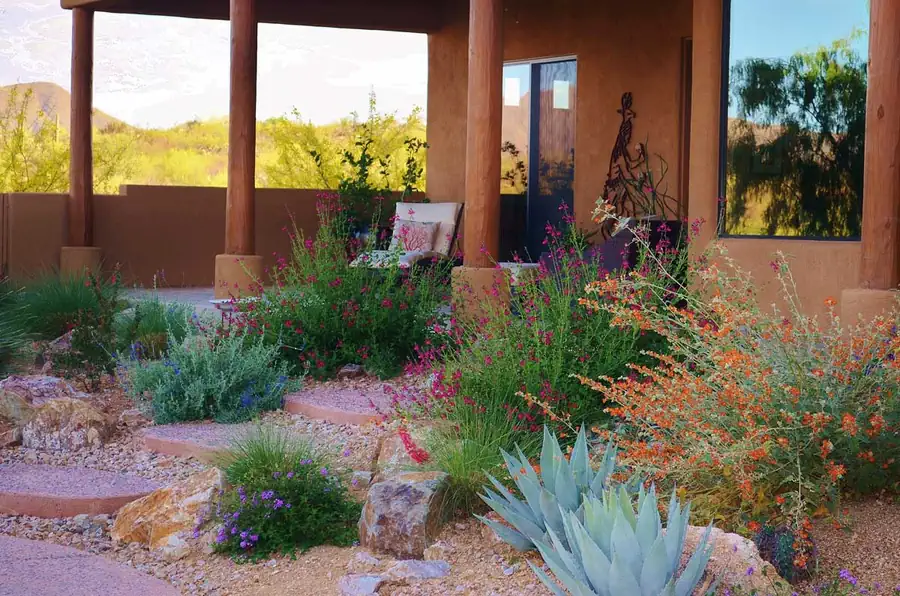
A successful landscape design in Tucson that can be enjoyed in the summer should focus on comfort, not just aesthetics. In the Sonoran Desert, the most effective outdoor spaces are planned around microclimate: where shade falls, how air moves, which surfaces store heat, and where people naturally want to gather at different times of day. Thoughtful landscaping design makes outdoor living more usable, more elegant, and more durable over time.
For high-end residential and commercial properties, the goal is not to fight the desert. It is to shape a more livable experience within it. That is why the best southwest landscapes are organized around performance as much as appearance.
What microclimate planning means
Microclimate is the set of local conditions felt in a specific part of a site. One terrace may feel harsh and exposed at 4 p.m., while another area ten feet away may feel comfortable because of overhead shade, reflected light, or moving air.
In practice, microclimate planning looks at four core comfort factors:
- Shade: when and where sun is blocked
- Airflow: how breezes enter, move through, or get trapped
- Materials: how paving, walls, furniture, and finishes absorb or release heat
- Placement: how outdoor rooms are positioned in relation to the house, structures, and views
This is the difference between an outdoor space that looks good in photos and one that people actually use in July.
Why beautiful outdoor spaces still feel uncomfortable
Many Tucson properties have strong architecture, quality finishes, and generous square footage, yet still underperform in summer. The problem is often not size or budget. It is sequence and placement.
A dining area may be located where late-day sun is strongest. A lounge may sit on heat-holding paving with no overhead protection. A courtyard may be enclosed in a way that blocks breezes. These are design issues, not styling issues.
A refined Tucson landscape should support how people live across the day and through the seasons. That means planning for solar exposure, wind movement, surface temperature, and human behavior from the beginning.
The four comfort levers that matter most
1. Shade should be planned by time of day
Shade is not one decision. It is a series of decisions based on orientation, season, and use.
Morning sun can be welcome in a breakfast patio. Late afternoon sun is usually the real stress point for summer comfort. That is why effective shade planning asks:
- Where is the harshest exposure from noon to sunset?
- Which spaces are meant for daytime use, and which are for evening use?
- Does the shade need to be structural, filtered, seasonal, or movable?
A well-designed outdoor room often uses a hierarchy of shade rather than one solution. Covered patios, architectural extensions, screens, strategically placed trees, and layered edge conditions can work together. The goal is not to darken the site. It is to create relief in the right places at the right hours.
2. Airflow should be shaped, not blocked
In hot climates, moving air changes how a space feels. Even a modest breeze can improve comfort when it is allowed to pass through seating areas instead of being trapped or diverted.
Airflow planning considers:
- Openings between structures and walls
- The height and density of screening elements
- Whether planting masses are cooling or obstructive
- How the house itself creates sheltered and exposed zones
This is especially important in courtyards, pool zones, and outdoor dining areas. If a space is fully enclosed for privacy but has no release for heat, it may feel still and heavy in summer. A more successful design balances enclosure with ventilation.
For a landscape architect Tucson property owners hire for long-term performance, airflow is part of space planning from the first layout, not an afterthought.
3. Materials quietly control comfort
Material selection is one of the most overlooked parts of outdoor comfort. Two patios can be equally attractive, yet one will feel dramatically hotter because of the surface finish, color, density, and amount of reflected heat.
In Tucson, material choices should be evaluated for:
- Heat absorption
- Glare
- Surface comfort underfoot
- Durability in strong sun
- Compatibility with surrounding walls and architecture
Large dark paving fields, reflective hardscape, and heat-retaining seat walls can make a space harder to use even if the layout is sound. By contrast, lighter-toned finishes, textured surfaces, and more balanced hardscape-to-softscape ratios can reduce heat load and improve comfort without compromising design quality.
This is one reason strong southwest landscaping designs feel composed rather than harsh. They do not rely only on visual style. They are calibrated for climate.
4. Placement determines whether people use the space
The most comfortable outdoor environments are zoned with purpose. Not every function belongs in the same exposure or on the same material palette.
A practical example:
- A morning coffee area may work well with filtered eastern light
- An evening dining terrace needs protection from late western sun
- A pool lounge may need a mix of sun and retreat
- A conversation area may benefit from more enclosure and softer materials
This placement strategy is what gives outdoor living areas range. Instead of one large exposed patio, the site becomes a sequence of usable spaces with different comfort profiles.
That is especially valuable for luxury homes, hospitality settings, and commercial properties where guests or clients expect the outdoor environment to feel intentional.
Design criteria worth considering before construction begins
Before finalizing any plan, it helps to evaluate comfort through a clear decision lens. A design-forward team should be weighing questions like these:
- How will each major outdoor space perform at 9 a.m., 2 p.m., and 6 p.m. in summer?
- Which surfaces will store heat and release it later in the day?
- Where does reflected heat come off walls, paving, glass, or water?
- Which zones need full shade, and which benefit from filtered light?
- Is privacy reducing airflow too much?
- Are the most important gathering areas placed where people will actually want to sit?
These are the kinds of criteria that separate basic plans from high-performing southwest landscapes with long-term value.
A short checklist for heat-ready outdoor living
When planning or reviewing a project, use this short checklist:
- Identify the hottest afternoon zones on the site
- Map where shade is needed by function, not just by appearance
- Review how wind enters and exits each outdoor room
- Compare paving and wall materials for heat gain, glare, and durability
- Place dining, lounging, and entertaining areas according to time-of-day use
- Avoid creating large exposed hardscape areas without relief
- Make sure comfort decisions align with the home’s architecture and lifestyle goals
Common mistakes to avoid
A common mistake is assuming that adding more features automatically improves the space. In reality, an outdoor kitchen, fire feature, or expansive terrace does little for comfort if the microclimate is poorly planned.
Another mistake is treating shade as a late-stage accessory. Shade affects layout, circulation, views, and structure. It belongs in the earliest design conversations.
A third mistake is focusing too narrowly on plant selection. Plants matter, but they are only one part of comfort. For clients searching for landscape designers Tucson property owners can trust, it is worth looking for a team that understands outdoor living as a system of architecture, site conditions, and climate response.
FAQ
What should I look for when comparing landscaping designers near me in Tucson?
Look for a team that can explain how the site will function in heat, not just how it will look. When reviewing landscaping designers near me, ask how they approach shade timing, airflow, material heat gain, and space placement. Comfort strategy is a strong sign of design depth.
Is there a difference between a garden designer near me and a landscape architect?
There can be. A search for garden designer near me may return professionals with different scopes of work. For more complex residential estates and commercial properties, a landscape architect Tucson clients select often brings a stronger framework for site planning, circulation, grading, structures, and long-term performance.
Why do Tucson landscape architects focus so much on placement?
Because placement drives usability. Experienced Tucson landscape architects know that two identical seating areas can perform very differently depending on orientation, exposure, and surrounding materials. Good placement protects comfort before decorative choices are even made.
Do southwest landscaping designs have to look rustic?
No. The best southwest landscaping designs can be contemporary, architectural, restrained, or highly expressive. What defines them is not a single style, but a thoughtful response to climate, regional character, and the way people live outdoors in the desert.
Final thought
In Tucson, outdoor comfort is designed. It comes from understanding how sun, air, materials, and spatial layout work together across the day. When those decisions are handled well, a landscape becomes more than visually impressive. It becomes usable, welcoming, and enduring through the hottest months of the year.
That is the standard clients should expect from serious landscape design Tucson work and from the landscape designers Tucson and Tucson landscape architects shaping outdoor spaces for long-term performance.
