
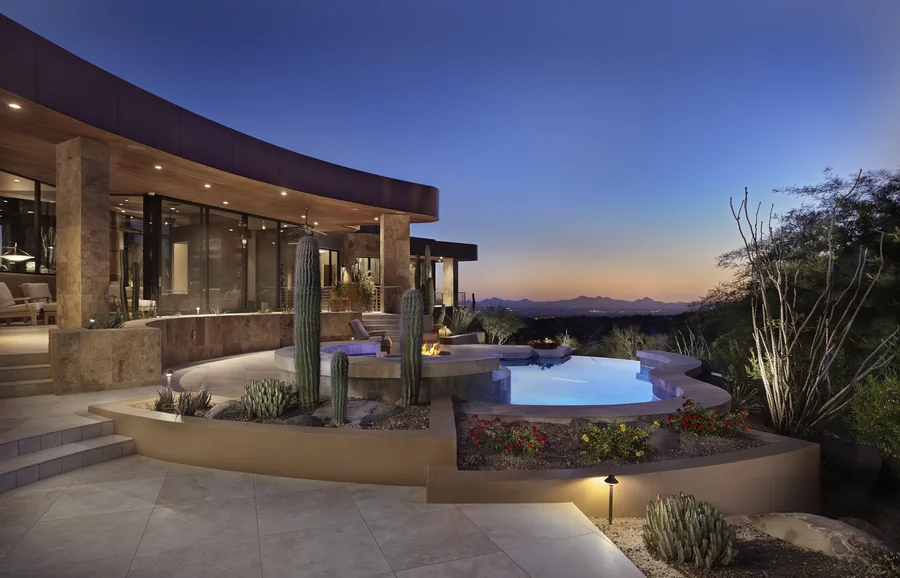
A pool can be the centerpiece of a property and still feel like an afterthought. That usually happens when the pool is designed as a stand-alone object instead of part of a larger architectural composition.
For high-value homes and commercial properties in Tucson, the goal is not simply to add a pool. It is to integrate pool, hardscape, planting, and lighting so the entire outdoor environment feels intentional, durable, and connected to the architecture of the site.
Start with the composition, not the feature
In strong landscape design, the pool is one element in a sequence of spaces. The question is not only where the water goes, but how movement, views, shade, and gathering areas work together.
A cohesive plan considers:
- The geometry of the building
- Primary sightlines from inside and outside
- How people move through the space
- The relationship between open areas and planted areas
- Day and night use
This is where a landscape architect Tucson property owners trust can add value: by shaping the whole site as one composition rather than treating each element separately.
Define the key terms
Hardscape refers to the built elements around the pool, such as patios, walls, paths, steps, and coping.
Planting structure means the placement of trees, shrubs, and groundcover to create scale, enclosure, shade, and visual rhythm.
Landscape lighting includes both safety and atmosphere. It should support circulation, highlight edges, and extend use into the evening without overwhelming the space.
Architectural composition means the pool and landscape are designed to follow a clear visual logic. Lines, materials, proportions, and transitions all feel related.
What makes a pool feel added-on
A pool often looks disconnected when one or more of these issues appear:
- The pool shape does not relate to the home or site geometry
- Decking materials change abruptly without a clear transition
- Planting is placed only at the perimeter, like decoration
- Lighting is added late and does not support the design
- Equipment, drainage, and circulation were not considered early
In tucson az landscape projects, these issues can be more noticeable because the strong sun, heat, and desert setting make inconsistencies stand out.
A framework for integration
1. Match the pool geometry to the architecture
The pool does not need to copy the building exactly, but it should feel related. Rectilinear homes often pair well with clean-lined pools and strong hardscape axes. More organic architecture may allow softer curves, but the overall logic should still be clear.
2. Use hardscape to create structure
Hardscape should do more than surround the pool. It should define edges, direct movement, and create usable rooms outdoors.
Good decision criteria include:
- Does the patio support circulation without feeling oversized or cramped?
- Are transitions between materials deliberate?
- Do walls, steps, and seating elements reinforce the layout?
- Does the hardscape visually connect the pool to the rest of the property?
3. Layer planting for scale and performance
In southwest landscapes, planting should do more than soften edges. It should provide scale, shade, privacy, and seasonal interest while remaining appropriate for the Sonoran Desert.
A strong planting plan usually includes:
- Canopy trees for structure and shade
- Mid-layer shrubs for mass and contrast
- Lower planting to define edges and reduce visual harshness
The best southwest landscaping designs use planting to support the architecture, not hide it.
4. Design lighting as part of the composition
Lighting should be planned early, not added at the end. It can define steps, emphasize texture, and make the pool area feel complete after sunset.
Ask whether lighting is doing three things:
- Supporting safe movement
- Creating visual hierarchy
- Preserving a calm nighttime atmosphere
5. Plan for long-term performance in the desert
A polished design still has to function in Tucson conditions. Materials, plant selection, drainage, and maintenance access all matter.
For landscape design Tucson projects, long-term performance often depends on whether the plan accounts for heat, glare, water use, and durability from the beginning.
Questions to ask before finalizing the design
If you are evaluating landscape designers Tucson property owners may hire, these questions can help clarify the approach:
- How does the pool relate to the home’s architecture?
- What is the primary view from inside the house?
- How will hardscape and planting work together visually?
- Where will lighting be placed, and why?
- How will the design perform in the Sonoran Desert over time?
- Is circulation clear for both everyday use and entertaining?
Quick checklist
Before moving forward, confirm that your plan addresses:
- Pool geometry that suits the site
- Hardscape that creates usable outdoor rooms
- Planting that adds scale, shade, and structure
- Lighting integrated into the overall design
- Materials appropriate for local conditions
- Clear circulation and sightlines
- Maintenance and access considerations
The takeaway
A pool feels architectural when it belongs to a larger idea. That means the pool, hardscape, planting, and lighting all support one another instead of competing for attention.
For homeowners and decision-makers looking for a garden designer or landscaping architect, the most important question is not just how the pool will look on day one. It is whether the entire outdoor space will still feel coherent, functional, and well-composed years from now.
That is the difference between a pool that was added and a landscape that was designed.
