
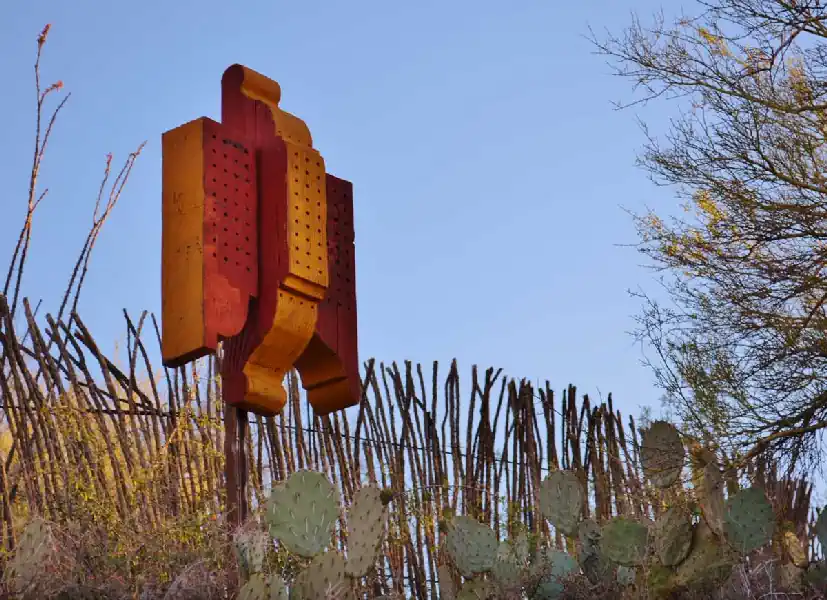
Privacy in Tucson does not have to mean building a heavy perimeter and closing off the landscape. In fact, for many high-end homes and commercial properties, the most successful approach is the opposite: screen selectively, layer thoughtfully, and preserve the views that make a Sonoran Desert setting feel distinctive in the first place.
That balance is where design matters. A good landscape architect avoid to simply hiding one space from another. The goal is to shape how people move, where they pause, and what they see at each point along the way. When privacy is handled this way, the result feels intentional rather than defensive, elegant rather than enclosed.
Why walls are not always the best answer
A tall wall can solve one problem while creating several others. It may block views, interrupt airflow, and make outdoor areas feel smaller than they are. In a Tucson az landscape, where light, open sky, and desert textures are part of the experience, that can work against the property’s character.
For clients seeking landscape design solutions in Tucson, the better question is often not “How do we hide everything?” but “What needs to be screened, from which angle, and for how long?” Once those answers are clear, the design can use layers instead of a single barrier.
What layered screening means
Layered screening is the use of multiple elements working together to create privacy gradually. Instead of one hard edge, the landscape uses depth.
Common layers may include:
- Planting masses that soften views and create a visual buffer
- Vertical elements that mark a threshold without feeling bulky
- Changes in grade, paving, or seating height that subtly redirect sightlines
- Open structures or partial screens that filter views rather than fully block them
This approach is especially effective in southwest landscapes because it complements the region’s architecture and terrain. It also gives landscape architects tucson a more flexible toolkit for balancing privacy, aesthetics, and long-term performance.
Screening strategies that feel high-end
The most refined southwest landscaping designs usually rely on restraint. Instead of filling every edge, they use targeted interventions.
1. Frame, don’t flatten
A well-placed screen can frame a courtyard, pool, or entry sequence while leaving the larger desert context visible. This creates a sense of arrival and enclosure without making the space feel boxed in.
2. Use depth to soften boundaries
A single line of planting is rarely enough on its own. A deeper planting bed, paired with carefully chosen vertical accents, can create privacy that feels more natural and less architectural in a rigid sense.
3. Protect key sightlines
Privacy should be designed around real views: from neighboring windows, from service areas, from streets, and from gathering spaces. A landscape architect tucson project often succeeds because it protects the right views while keeping the important ones open.
4. Match the screen to the space
A residence, office courtyard, hospitality property, or retail entry each needs a different response. A commercial frontage may need subtle separation from parking or pedestrian traffic, while a home may need a quieter transition from interior to terrace. The right landscape designer will tailor the screening strategy to the use of the space, not force one formula everywhere.
Decision criteria for Sonoran Desert privacy design
When evaluating privacy options, it helps to think beyond appearance. In the Sonoran Desert, the best choice is usually the one that performs well over time and fits the site.
View protection
What exactly needs to be screened? A neighboring second-story window, a street, a service area, or a direct line of sight from an adjacent patio? The answer shapes the height, density, and placement of the screen.
Openness
How much openness should remain? Some properties benefit from a filtered edge that preserves expansive desert views. Others need stronger separation in specific zones. The right balance depends on use, exposure, and design intent.
Climate fit
Materials and planting should suit the Tucson climate. In a landscape design process, durability matters as much as style. Heat, sun, wind, and water use all affect how screening elements age and perform.
Maintenance
A screen that looks elegant at installation but becomes difficult to maintain is not a long-term solution. Landscape designers near me searches often lead clients to design choices that look good on day one; the more important question is how those choices will look in five or ten years.
Architectural compatibility
The screening should feel like part of the architecture, not an afterthought. Clean lines, proportion, and transitions matter. The best tucson landscape architects think in terms of the whole property, not just the planting plan.
Practical screening elements to consider
A privacy strategy can be built from several types of elements, depending on the property:
- Layered planting for softness and visual depth
- Low walls or seat walls used selectively, not as the dominant edge
- Trellises or partial screens that filter views
- Courtyard planning that turns privacy inward
- Path alignment that controls what is seen first and what is revealed later
- Height changes that create separation without heavy construction
These tools are most effective when they are coordinated. A landscape architect or landscape designer can combine them into a sequence that feels calm and deliberate.
A short checklist before you design
Before committing to a privacy plan, consider these questions:
- What do you want to block, and what do you want to keep visible?
- Which areas need the most privacy: entry, pool, patio, dining, or service zones?
- Will the screen feel appropriate from both inside and outside the property?
- Does the solution fit the scale of the architecture?
- Will the materials and planting hold up in a tucson az landscape?
- Does the design create enclosure without making the property feel smaller?
If the answer to any of these is unclear, the design likely needs more refinement.
The value of a design-led approach
Privacy is not only a functional issue. It affects how a place feels, how people use it, and how it presents itself over time. That is why high-end landscaping design in Tucson often starts with spatial planning, not with a wall detail.
For homeowners and commercial decision-makers alike, the most successful solution is usually the one that looks effortless because the logic behind it is strong. In the Sonoran Desert, that means using screening as part of a broader composition: one that respects views, supports comfort, and fits the landscape rather than fighting it.
When privacy is designed this way, the property gains more than separation. It gains clarity, calm, and a more complete sense of place.
