
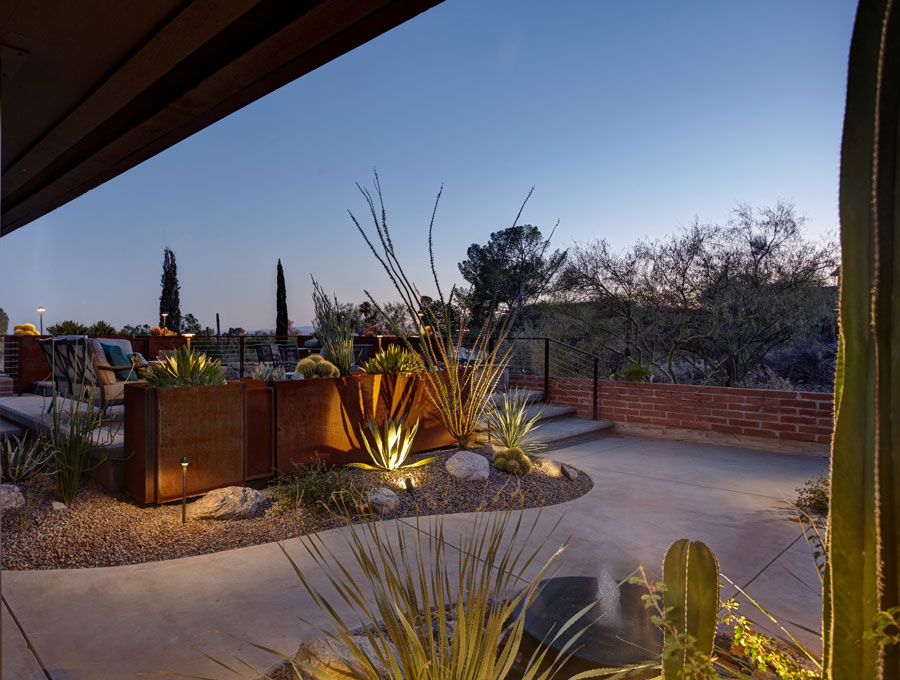
Drought-tolerant landscape design creates attractive, functional outdoor spaces that use less water by combining climate-appropriate plants, efficient irrigation, thoughtful plant placement, and carefully selected hardscape materials. In Tucson, this approach does not mean covering a yard with gravel or sacrificing color.
A well-designed drought-tolerant landscape can include layered vegetation, seasonal blooms, shaded gathering areas, sculptural plants, natural stone, and outdoor features that complement the architecture of the property.
Beyond its visual appeal, drought-tolerant landscaping can reduce unnecessary water use, simplify long-term maintenance, and create a more resilient outdoor environment suited to Southern Arizona’s arid climate. Here is what this type of landscape can look like and what homeowners should consider when planning one.
What Is Drought-Tolerant Landscape Design?
Drought-tolerant landscape design is the intentional planning of an outdoor space to perform well with limited supplemental water. It commonly combines native and desert-adapted plants, efficient irrigation, water-conscious plant grouping, soil preparation, mulch, shade, and hardscape areas that reduce dependence on conventional lawns.
The goal is not simply to choose plants that can survive drought. A successful design considers how plants, circulation, gathering spaces, drainage, seasonal color, and architectural features work together. This creates a landscape that is both water-conscious and visually connected to the home and the surrounding Sonoran Desert.
Drought-tolerant design is related to xeriscaping, but the terms are not completely interchangeable. Xeriscaping is a broader water-conservation strategy, while drought-tolerant landscape design focuses primarily on plants, materials, microclimates, and layout choices that perform reliably in dry conditions. Permaculture takes a more comprehensive approach by treating the landscape as an interconnected living system. Our guide to the differences between permaculture, xeriscape, and drought-tolerant landscape design explains how each approach can be applied to Tucson properties.
Native and Desert-Adapted Plants
One of the defining characteristics of drought-tolerant landscape design is the use of plants suited to the local climate. Native plants have adapted to Southern Arizona’s heat, seasonal rainfall patterns, soils, and periods of limited water. Desert-adapted plants from other arid regions may also perform well when they are selected carefully and placed in appropriate conditions.
Agaves, yuccas, desert marigolds, ornamental grasses, flowering perennials, desert shrubs, and climate-appropriate trees can be combined to create a layered plant palette. Structural plants establish strong forms and focal points, while softer shrubs, grasses, and flowering plants add movement, seasonal color, and visual depth.
Plant selection should go beyond choosing species labeled as drought-tolerant. Sun exposure, reflected heat, soil conditions, mature plant size, drainage, and proximity to buildings or pavement can all affect how a plant performs. A species that thrives in a protected courtyard may struggle in an exposed area beside a west-facing wall.
A diverse plant palette can also provide food and shelter for hummingbirds, butterflies, bees, and other desert wildlife. This allows the landscape to support local ecosystems without sacrificing a refined or carefully composed appearance.
Xeriscaping and Water-Wise Plant Grouping
Xeriscaping is a landscaping approach that emphasizes water conservation through thoughtful planning, appropriate plant selection, efficient irrigation, soil care, mulching, and practical maintenance. It can be minimal and contemporary, lush and layered, or inspired by the natural character of Southwest landscapes.
One important xeriscaping principle is hydrozoning, or grouping plants according to their water requirements. Plants that need similar irrigation are placed together so water can be delivered more accurately. This helps avoid situations where low-water plants are overwatered because they share an irrigation zone with plants that need more frequent moisture.
Mulch can also help moderate soil temperatures, reduce evaporation, and limit weed growth. Depending on the design and plant palette, mulch may include organic material, gravel, or another mineral surface appropriate to the property.
Drought-tolerant does not mean that plants never need irrigation. New plants generally require consistent establishment watering while their root systems expand into the surrounding soil. Irrigation can then be adjusted as the plants mature. The University of Arizona Cooperative Extension provides additional guidance on the establishment and care of drought-tolerant plants.
Creative Hardscape Elements
Drought-tolerant landscape design does not require an outdoor space to feel sparse or unfinished. Hardscape can provide structure, define how people move through the property, and create comfortable areas for dining, entertaining, relaxing, and enjoying the landscape after sunset.
Patios, walkways, courtyards, outdoor kitchens, fireplaces, fire pits, seat walls, steps, and shaded gathering areas can reduce the need for extensive lawns while making the property more usable. The placement and proportion of these elements should respond to the architecture of the home and the way the owners intend to use the space.
Materials such as natural stone, flagstone, decomposed granite, gravel, and permeable pavers can create visual continuity between the built environment and the surrounding desert. Changes in material, texture, scale, and pattern can also distinguish an arrival sequence, primary gathering area, garden path, or quiet retreat.
Hardscape should not simply replace vegetation. Too much paving or exposed rock can make a space feel harsh and increase reflected heat. A more balanced design uses plants, shade, hardscape, and open space together. Our guide to Southwest landscape materials for Tucson properties explores how these materials can support both appearance and performance.
Color and Texture Variety
A drought-tolerant landscape can be colorful, layered, and visually engaging throughout the year. The key is to build the composition around differences in foliage, form, bloom season, height, and texture rather than relying on a small number of plants repeated without a clear structure.
The soft, silvery foliage of sage can contrast with the bold geometry of agaves and cacti. Ornamental grasses introduce movement, while flowering shrubs and perennials provide carefully timed areas of color. Trees and large shrubs can create a taller canopy layer, with smaller plants filling the middle and lower portions of the composition.
Plant forms can also be used architecturally. Upright plants may frame an entry or important view, rounded shrubs can soften walls and paving, and sculptural specimens can become focal points. Repetition provides unity, while selected changes in color and texture create interest.
A successful plant palette also considers how the landscape will look in different seasons and as plants mature. This prevents the property from appearing vibrant for only a short flowering period or becoming overcrowded as plants reach their full size.
Benefits of Drought-Tolerant Landscape Design
A thoughtfully planned drought-tolerant landscape provides benefits that extend beyond its appearance.
Reduced Water Use and Maintenance
Once properly established, many native and desert-adapted plants require less frequent irrigation than conventional lawns and high-water plantings. Hydrozoning and an appropriately designed irrigation system allow water to be delivered according to the needs of each planting area, helping reduce overwatering and unnecessary waste.
A climate-appropriate plant palette may also require less intensive maintenance than plants that continually struggle against Tucson’s heat and dry conditions. However, drought-tolerant landscaping is not maintenance-free. Irrigation still needs to be monitored, weeds controlled, and plants pruned according to their natural growth habits.
Long-Term Landscape Resilience
Plants selected for Tucson’s climate are generally better prepared for intense sunlight, seasonal temperature changes, and extended dry periods. Choosing appropriate plants and materials can reduce replacement needs and create a landscape that performs more reliably over time.
A resilient landscape is also designed around the realities of the individual property. Drainage, soil, microclimates, reflected heat, wind, and existing vegetation should all inform the design. This site-specific planning is more dependable than applying the same plant list or layout to every property.
Reduced irrigation requirements and more appropriate plant choices may also lower some of the ongoing water and maintenance expenses associated with the landscape. The exact savings will depend on the existing property, the new design, irrigation performance, plant establishment, and maintenance practices.
Support for Pollinators and Local Wildlife
Drought-tolerant landscaping can provide food, shelter, and seasonal interest for hummingbirds, butterflies, bees, and other desert wildlife. Plant diversity is especially important.
Combining flowering perennials, shrubs, grasses, trees, succulents, and other climate-appropriate plants can create a more layered and ecologically valuable outdoor environment. Planting for wildlife can still look intentional and elegant when species are arranged according to a clear design structure.
How to Plan a Drought-Tolerant Landscape in Tucson
Creating a successful drought-tolerant landscape involves more than replacing a lawn or selecting a collection of low-water plants. The entire property should be considered as a connected outdoor environment.
Working with an experienced landscape architect in Tucson is especially important when planning a drought-tolerant landscape. A professional can evaluate the property’s microclimates, drainage, soil, irrigation, architecture, and long-term maintenance needs, then coordinate planting and hardscape within one cohesive design. This helps ensure that the finished landscape is not only water-conscious, but also functional, visually balanced, and appropriate for its Sonoran Desert setting.
1. Evaluate the Site Conditions
The process begins with a detailed assessment of the property. Important conditions include:
- Morning and afternoon sun exposure
- Reflected heat from walls, glass, and paving
- Existing trees and vegetation
- Soil composition and areas of caliche
- Slopes, drainage patterns, and erosion
- Wind exposure
- Views that should be framed, preserved, or screened
- Existing irrigation and utilities
These conditions can vary considerably within the same property. A shaded courtyard, exposed pool deck, north-facing garden, and west-facing entry may each require a different plant and material strategy.
2. Define How the Outdoor Space Will Be Used
Before selecting plants, determine how each part of the property should function. The design may need to accommodate dining, entertaining, poolside relaxation, cooking, circulation, pets, privacy, views, or quiet garden areas.
These priorities help determine where patios, walkways, shade structures, planting beds, lighting, and focal features should be located. They also prevent the drought-tolerant strategy from becoming a plant-focused exercise that overlooks how the homeowners will experience the property.
3. Establish a Clear Planting Structure
The planting design should begin with the largest structural elements, including trees, screening plants, major shrubs, and sculptural focal specimens. Mid-sized shrubs, grasses, perennials, and ground-level plants can then be layered around that framework.
Plants should be selected for both present appearance and mature size. Placing plants too closely may make a new installation look full immediately, but it can eventually create overcrowding, excessive pruning, poor air circulation, and competition for water.
A well-planned composition balances repetition and variety. Repeated plants and forms create cohesion, while controlled changes in color, texture, and seasonal bloom prevent the landscape from becoming monotonous.
4. Create Hydrozones and Plan Irrigation
Plants with similar watering requirements should be grouped together and connected to irrigation zones that can be adjusted independently. Trees, shrubs, perennials, containers, turf, and specialty planting areas should not automatically receive the same watering schedule.
The irrigation design should also account for how plants will grow. Emitters placed only beside the original root ball may need to be repositioned or supplemented as the root zone and canopy expand.
Where site conditions permit, passive water-harvesting features can slow and direct stormwater toward suitable planting areas. Basins, grading, and other drainage strategies must be coordinated carefully so water moves away from structures and does not create erosion or prolonged saturation around plants that need well-drained soil. The City of Tucson provides additional information about water harvesting for landscapes.
5. Balance Hardscape, Planting, and Shade
A drought-tolerant design should not be dominated by a single material. Large expanses of gravel or paving may reduce planted area, but they can also produce an uncomfortable or visually empty space when they are not balanced with vegetation and shade.
Hardscape should support circulation and outdoor living, while planting softens edges, frames views, creates scale, and connects the property to its surroundings. Shade trees, ramadas, covered patios, or other architectural shade features can improve comfort and make outdoor areas more usable during warmer parts of the year.
The goal is not to maximize either plants or hardscape. It is to establish the right proportion between built features, planting, open space, and shade for the architecture and lifestyle of the property.
6. Consider Maintenance From the Beginning
Every landscape requires ongoing care. The design should reflect how much seasonal maintenance the owner wants and the level of formality expected.
Plants with natural forms should have enough room to mature without constant shearing. Irrigation equipment should remain accessible, and material transitions should be designed to simplify cleaning and weed management. Deciduous plants, flowering trees, grasses, and plants that produce seed pods can be placed where their seasonal characteristics will not create avoidable maintenance problems.
Planning for mature growth and realistic maintenance helps preserve the original design intent long after installation.
7. Develop a Cohesive Master Plan
Planting, irrigation, drainage, patios, pathways, lighting, shade, outdoor kitchens, fire features, pools, and other elements should be coordinated within one complete plan. Designing each component separately can lead to awkward transitions, inefficient irrigation, limited circulation, or features that compete with one another.
At Landscape Design West, our landscaping design process begins with a discovery conversation and site analysis. Customized concepts are then developed to balance the client’s preferences with the environmental, architectural, cultural, and functional characteristics of the property.
This master-plan approach allows drought tolerance to become part of the entire outdoor experience rather than an isolated collection of plants.
Common Drought-Tolerant Landscaping Mistakes
Several common mistakes can prevent a drought-tolerant landscape from reaching its full potential:
- Treating gravel as the complete design: Gravel can be useful, but it does not replace thoughtful planting, shade, circulation, or outdoor living areas.
- Selecting plants without evaluating the site: A drought-tolerant label does not guarantee that a plant will perform in every exposure, soil, or microclimate.
- Overcrowding new planting beds: Plants need adequate room to reach their mature size and natural form.
- Using one irrigation schedule for every plant: Trees, shrubs, perennials, containers, and turf may require different irrigation zones and schedules.
- Assuming drought-tolerant means no irrigation: New plants require establishment watering, and even mature plants may need supplemental irrigation during prolonged dry periods.
- Ignoring reflected heat: Walls, windows, pavement, and pool decking can create conditions significantly hotter than the surrounding air.
- Designing plants and hardscape separately: The strongest landscapes coordinate planting, materials, circulation, drainage, and outdoor functions within one plan.
Avoiding these mistakes can create a landscape that looks intentional when first installed and continues to perform as it matures.
Frequently Asked Questions About Drought-Tolerant Landscape Design
Does drought-tolerant landscaping have to look sparse?
No. Drought-tolerant landscape design can be soft, colorful, layered, and visually rich. A fuller appearance is created through plant selection, strategic placement, shade, seasonal color, and varied forms rather than uniformly high water use.
Is drought-tolerant landscaping the same as xeriscaping?
They overlap, but they are not identical. Xeriscaping is a broader water-conservation approach that includes planning, soil care, efficient irrigation, hydrozoning, mulching, and maintenance. Drought-tolerant design focuses more specifically on plants, materials, and layout strategies that remain attractive and resilient with less supplemental water.
Can a drought-tolerant landscape include a lawn?
Yes. Turf can be included when it serves a clear recreational, functional, or visual purpose. The goal is to use it intentionally rather than treating it as the default surface throughout the property.
Do drought-tolerant plants need irrigation?
Most newly installed plants need regular establishment watering. Their irrigation can usually be adjusted as the root systems develop, but the appropriate schedule depends on the plant, soil, exposure, season, and weather.
Can drought-tolerant landscaping work with a luxury home?
Yes. Drought tolerance describes how the landscape performs, not a single visual style. With appropriate materials, strong planting composition, carefully designed outdoor living areas, shade, and lighting, a drought-tolerant landscape can feel highly refined and complement contemporary, traditional, or regional architecture.
Create a Drought-Tolerant Landscape Designed for Tucson
Drought-tolerant landscape design offers a practical and visually compelling alternative to water-intensive landscaping in Southern Arizona. Native and desert-adapted plants, efficient irrigation, layered planting, appropriate hardscape, shade, and careful site planning can produce an outdoor environment that feels colorful, comfortable, and connected to its setting.
The strongest results come from treating water conservation, outdoor living, architecture, and aesthetics as parts of the same design. Rather than applying a standard plant list, Landscape Design West creates customized plans based on the property, environmental conditions, and the way each client wants to experience the space.
Explore our landscape design projects or contact Landscape Design West to begin planning a distinctive drought-tolerant landscape for your Tucson property.
